
The Power of “Sold Out”
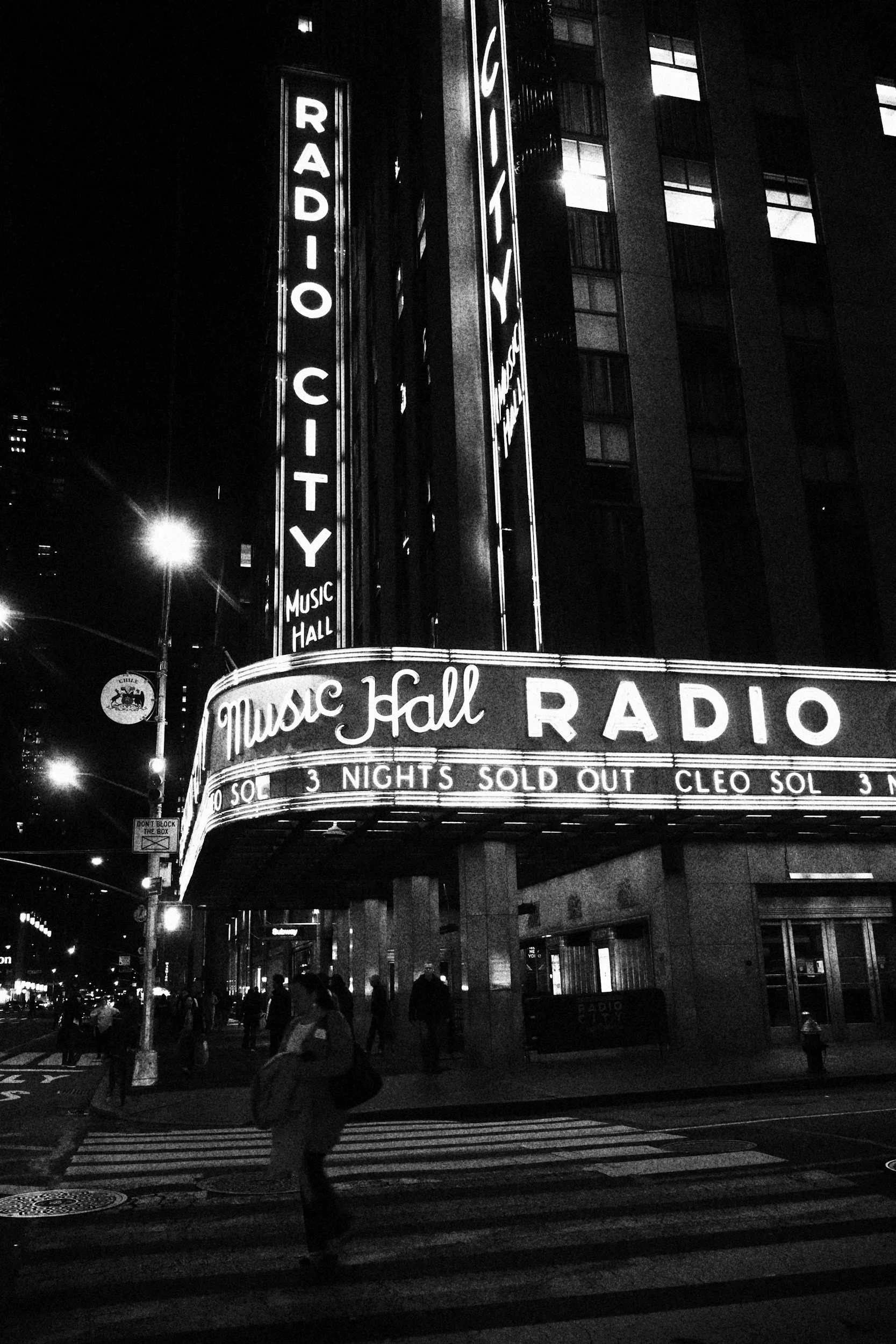
Scarcity vs ubiquity — and why restraint has become music’s most valuable signal
By 2026, the music industry has reached an uncomfortable consensus: availability is no longer a differentiator.
Music is everywhere, all the time. Discovery has been democratised, distribution flattened, and back catalogues rendered permanently accessible. In this environment of infinite supply, one phrase continues to punch above its weight: sold out.
Not because it denotes absence, but because it signals demand, commitment, and cultural gravity. In a market saturated with choice, scarcity has become one of the last reliable drivers of action.
Scarcity as information, not inventory
“Sold out” functions less as a stock update and more as a social signal. Behavioural research has consistently shown that consumers interpret demand-driven scarcity — such as “sold out” or “almost gone” — as evidence of popularity rather than mere unavailability (Sun, 2022). This distinction matters. Demand scarcity implies that others valued the product enough to act, creating a shortcut for perceived worth.
Gierl and Huettl (2010) demonstrated that “almost sold out” messaging increases perceived attractiveness because it communicates collective endorsement. In music, where consumption is closely tied to identity and belonging, that endorsement carries disproportionate weight. Tickets, vinyl variants and limited merch function as membership artefacts, not commodities.
“Sold out” does not simply say you missed it. It says this mattered.
Live music: scarcity’s sharpest edge — and its most fragile
Live music remains the industry’s most powerful scarcity engine. Capacity is finite, time-bound, and culturally loaded. The phrase “I was there” continues to carry more value than any digital substitute.
However, the mid-2020s exposed how easily scarcity can curdle into resentment. Pollstar’s 2025 year-end analysis showed headline touring grosses holding firm while ticket volumes softened and pricing pressure intensified, indicating a market testing the limits of fan tolerance (Pollstar, 2025).
The ticketing controversies surrounding major on-sales in 2024–25 reframed the role of sell-outs entirely. The UK Competition and Markets Authority’s investigation into Ticketmaster following Oasis ticket sales highlighted concerns around pricing transparency and consumer understanding (CMA, 2024). Although subsequent findings suggested dynamic pricing had not been used in that instance, the episode accelerated scrutiny of how scarcity is engineered and communicated (Music Business Worldwide, 2025).
In the United States, an FTC-led antitrust lawsuit against Live Nation and Ticketmaster further reinforced the idea that how scarcity is created matters as much as scarcity itself (Associated Press, 2025).
By 2026, the lesson is clear: scarcity without trust destroys value. When fans believe the system is unfair, “sold out” stops signalling demand and starts signalling dysfunction.
Scarcity vs ubiquity is a false binary
The most effective operators have moved beyond the simplistic choice between limited and everywhere. The real strategic question is where the constraint is applied.
Listening is ubiquitous. Scarcity has therefore migrated up the funnel — into access, timing, format and meaning. In 2026, effective scarcity tends to appear in:
Access: fan-first presales, verified communities
Format: numbered physical editions, bespoke variants
Moment: time-boxed drops and one-off events
Place: pop-ups, secret shows, location-specific releases
Identity: artefacts tied to narrative and shared memory
This is how “sold out” has survived the streaming era. The constraint is no longer can you hear it? but can you participate in it?
Merch, drops and the action economy
Merch has evolved from ancillary revenue into behavioural infrastructure. Limited drops and pop-ups create deadlines in an attention economy otherwise defined by frictionless consumption.
Forbes’ analysis of touring and fandom monetisation highlighted how scarcity-driven merch strategies became central to both engagement and margin protection during the mid-2020s (Forbes, 2025). Scarcity succeeds where ubiquity fails because it converts enthusiasm into action. Streams can be passive; limited artefacts demand commitment.
Yet the distinction between rewarding and exploitative scarcity has become increasingly visible. Clear rules, fair access and meaningful differentiation build trust. Artificial shortages and perpetual FOMO erode it.
The hidden cost of perpetual sell-outs
A sell-out creates a halo effect, increasing the perceived value of adjacent offerings — future dates, mailing lists, standard editions. But there is a ceiling.
If fans repeatedly lose — to bots, opaque pricing or unexpected fees — disengagement follows. Ongoing coverage of ticket fees and “drip pricing” throughout 2025 demonstrated how frustration can overshadow demand, even when shows technically sell out (The Guardian, 2025).
By 2026, the industry’s primary risk is not unsold inventory, but fan churn.
Designing credible scarcity in 2026
Sustainable “sold out” moments now share common characteristics:
Transparency
Quantities, pricing logic and restock intentions are clearly communicated.
Fair access
Verified systems, genuine purchase limits and visible anti-bot measures protect trust.
Meaningful differentiation
Limited editions offer substance, not cosmetic variation.
Second-chance pathways
Waitlists, staggered releases or open editions reduce exclusion while preserving excitement.
Ethical pricing
All-in pricing and fee transparency are now reputational necessities, not optional gestures.
Why “sold out” still matters in an AI-saturated world
As generative AI accelerates content abundance, constraint becomes meaning.
Music files are infinite. Experiences are not. Community is not. Provenance is not. What cannot be replicated is the room, the night, the shared moment of commitment.
In 2026, “sold out” remains one of the industry’s most powerful signals — but only when it is earned.
It is no longer a flex. It is a promise: that demand was real, access was fair, and participation meant something.
Break that promise, and scarcity becomes noise. Keep it, and it remains one of music’s most valuable currencies.
WANT MORE LIKE THIS?
Why not read more here
Or book yourself a 1 to 1 Mentoring session with one of our touring professionals, they can help you avoid some headache and heart ache by showing you the path the have already taken.
References
Associated Press (2025) FTC, states sue Live Nation and Ticketmaster over ticketing practices. Available at: https://apnews.com/article/16e87186902b029f2a4fda5334f12baf
CMA (2024) CMA launches investigation into Ticketmaster over Oasis concert sales. Available at: https://www.gov.uk/government/news/cma-launches-investigation-into-ticketmaster-over-oasis-concert-sales
Forbes (2025) As artists monetise fandom, merch rules touring economics. Available at: https://www.forbes.com/sites/andreazarczynski/2025/06/30/as-artists-monetize-fandom-absolute-merch-rules-touring/
Gierl, H. and Huettl, V. (2010) ‘Are scarce products always more attractive?’, Journal of Economic Psychology, 31(5), pp. 823–835.
Music Business Worldwide (2025) Ticketmaster didn’t use dynamic pricing for Oasis concerts, UK watchdog says. Available at: https://www.musicbusinessworldwide.com/ticketmaster-didnt-use-dynamic-pricing-for-oasis-concerts-will-change-how-it-sells-tickets-in-uk-watchdog-says/
Pollstar (2025) Year-End Business Analysis: A Return to Earth. Available at: https://news.pollstar.com/2025/12/23/year-end-business-analysis-a-return-to-earth-2025-grosses-ticket-sales-drop-averages-increase-beyonce-oasis-coldplay-have-top-tours-venues-stadiums-rock/
Sun, Y. (2022) ‘Scarcity in today’s consumer markets’, Frontiers in Psychology, 13. Available at: https://pmc.ncbi.nlm.nih.gov/articles/PMC9520963/
The Guardian (2025) Gig-goers fight back against rising ticket fees. Available at: https://www.theguardian.com/money/2025/dec/27/ticket-fees-uk-gig-goers-fight-back-against-new-wave-of-charges