The Problem With Infinite Creative Control
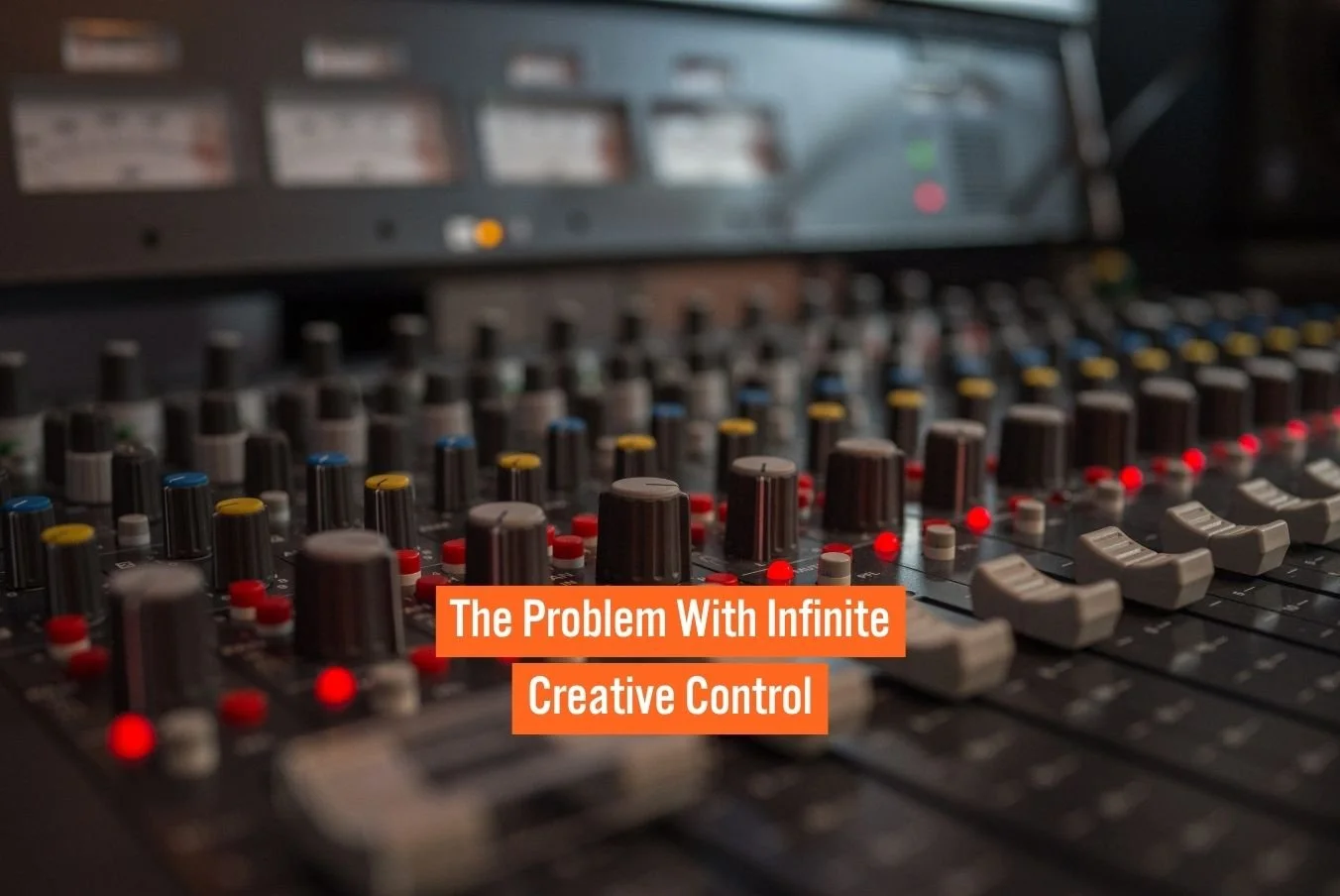
Ownership without structure — and why creative leadership mentoring is now a core artist skill.
A decade ago, “creative control” was the hill to die on. Artists wanted it; labels negotiated it; managers used it as leverage. In 2026, the irony is that many artists now have more control than ever — distribution is frictionless, production is affordable, direct-to-fan is viable, and ownership-first deal structures are everywhere.
Yet a quietly growing number of projects are failing for a reason that has nothing to do with talent, tech, or even budget.
They’re failing because infinite creative control is not the same thing as effective creative leadership.
And the industry is still learning how to tell the difference.
Ownership is finally mainstream — but leadership hasn’t caught up
The ownership narrative is real and materially important. It’s been turbocharged by high-profile catalogue and masters stories (including the ongoing cultural weight of “owning your work” as a career principle). The market continues to validate rights as a long-term asset class, while artists and investors both treat IP as the centre of gravity for career leverage.
At the same time, the value chain around recorded music keeps expanding: creator royalties hit new highs in recent CISAC reporting, and IFPI continues to frame sustained revenue growth as linked to investment, marketing, globalisation and — increasingly — responsible use of data and technology.(CISAC,2025)
So yes: ownership is a win.
But here’s the uncomfortable part: ownership doesn’t automatically ship great records, build compelling worlds, or create repeatable momentum. In practice, what many artists are experiencing is control without structure — the feeling of running a label, studio, and brand agency inside the same nervous system.
That’s not “freedom”. That’s a management problem.
Infinite choice creates invisible creative drag
Creative work needs space. But it also needs shape.
When everything is possible — infinite plug-ins, infinite references, infinite release options, infinite audience niches — decisions stop being creative and start becoming existential. The artist isn’t just choosing a snare. They’re choosing identity.
This is where projects stall:
Decision paralysis: endless revisions because there’s no shared “definition of done”.
Taste without governance: “I don’t like it yet” becomes the only feedback system.
No clear roles: the artist is simultaneously CEO, A&R, producer, social lead and therapist.
Release plans built on vibes: momentum dies because the schedule isn’t protected.
Accountability gaps in modern deal structures: services models can be powerful, but if responsibilities and outcomes aren’t explicit, “support” becomes a fog.
None of this is new to anyone who’s worked in studios or label teams. The difference now is that many creators are running the whole machine solo — while also being told (by the culture, and sometimes by the industry) that needing structure means you’re “selling out”.
It doesn’t.
It means you’re professionalising.
The overlooked truth: constraints improve creativity
There’s a strong body of research showing that constraints aren’t anti-creative — they can be the mechanism that forces originality. The key isn’t “more freedom”; it’s the right combination and level of constraints.
In other words, the artistic goal isn’t maximum control. It’s designed control.
And that’s exactly what the best producers, A&Rs, music supervisors and creative directors have always done: they don’t “limit” artists — they build a container that helps the artist deliver their best work on time, on brief, on brand, without sanding off the personality.
When artists remove the entire container in the name of independence, they often remove the conditions that made their best work possible.
The new power asset isn’t just masters — it’s data ownership
Another modern twist: control isn’t only creative — it’s informational.
Artists are increasingly realising that ownership of recordings isn’t the only leverage point; ownership of audience relationships (data, direct channels, insights) is the economic engine beneath sustainable independence. That’s become a recurring theme in industry commentary this year.
Meanwhile, Spotify continues to push its own transparency narrative through Loud & Clear (last updated March 2025, based on 2024 full-year data), reinforcing how platform-side framing shapes artist expectations about “how the system works”.
Put simply: the artist who “owns everything” but can’t execute consistently — or can’t interpret the signals coming back from the market — is still operating at a disadvantage.
Control without operational clarity is just noise.
Creative leadership is now a required artist skill
“Creative leadership” is a real, researched domain: leading people toward creative outcomes, adapting leadership behaviour to context, and building environments where creativity can reliably happen.
In music terms, creative leadership means you can:
set a clear creative vision (sonic + narrative + audience promise),
translate it into constraints (palette, tempo world, collaborators, formats),
assign decision rights (who decides what, and when),
run feedback loops (what you test, who you trust, what you ignore),
protect deadlines (because “later” is the enemy of release momentum),
and keep the team aligned when confidence dips — which it always does mid-project.
This is not “label thinking”. It’s what grown-up independent careers require.
turning control into a system
Most artists don’t need more information. They need help designing a process they can actually live inside — one that fits their psychology, their workflow, and their career goals.
Good creative mentoring does three things:
Clarifies the brief (even when there isn’t one)
You turn “I want to make something sick” into measurable creative intent: references, emotional targets, audience context, release purpose.Builds an operating system for decisions
Not every choice deserves the same energy. Mentoring helps artists create rules like:
“We don’t reopen arrangement after mix prep.”
“We commit to a vocal tone by the third session.”
“We choose collaborators for outcomes, not comfort.”Creates accountability without killing the vibe
Deadlines, milestones, review formats, and post-mortems become normal — not scary.
There’s also broader evidence across education and professional development that mentoring frameworks can support leadership capabilities (including the emotional and reflective dimensions that creative careers constantly demand).
A practical model: “Control with rails”
If you want the benefits of independence without the chaos tax, build rails:
Vision: one-page “creative constitution” for the project (sound, story, why-now).
Constraints: limited palette (drums/synths/guitars), tempo range, reference stack.
Roles: even if solo, name the hats — and timebox them (artist vs editor vs marketer).
Cadence: fixed weekly output rhythm (writing days / production days / review day).
Feedback rules: who gets a vote; what counts as a note; when notes are allowed.
Release system: date-first planning, not “when it feels finished”.
Data loop: define what you measure and what you don’t measure (to stay sane).
That’s the difference between a creator who is “fully independent” and a creator who is leading an independent business.
The real take
The industry spent years teaching artists to fight for control. Now it has to teach them how to use it.
Because the next competitive edge isn’t who owns the most.
It’s who can turn ownership into repeatable outcomes — without burning out, without stalling, and without shipping half-finished visions.
That’s creative leadership. And increasingly, it’s mentored.
Wider reading
IFPI — Global Music Report 2025 (State of the Industry): https://www.ifpi.org/wp-content/uploads/2024/03/GMR2025_SOTI.pdfIFPI
Spotify — Loud & Clear (last updated March 2025; 2024 full-year data): https://loudandclear.byspotify.com/Loud and Clear
MBW — On understanding the critical value of data ownership: https://www.musicbusinessworldwide.com/on-understanding-the-critical-value-of-data-ownership/Music Business Worldwide
SAGE Journals (2024) — How combinations of constraint affect creativity: https://journals.sagepub.com/doi/10.1177/20413866231202031SAGE Journals
Taylor & Francis (2024) — The Role of Creative Leadership Manifestations…: https://www.tandfonline.com/doi/full/10.1080/10400419.2024.2321734Taylor & Francis Online