
Why Self-Producing Isn’t Always a Saving
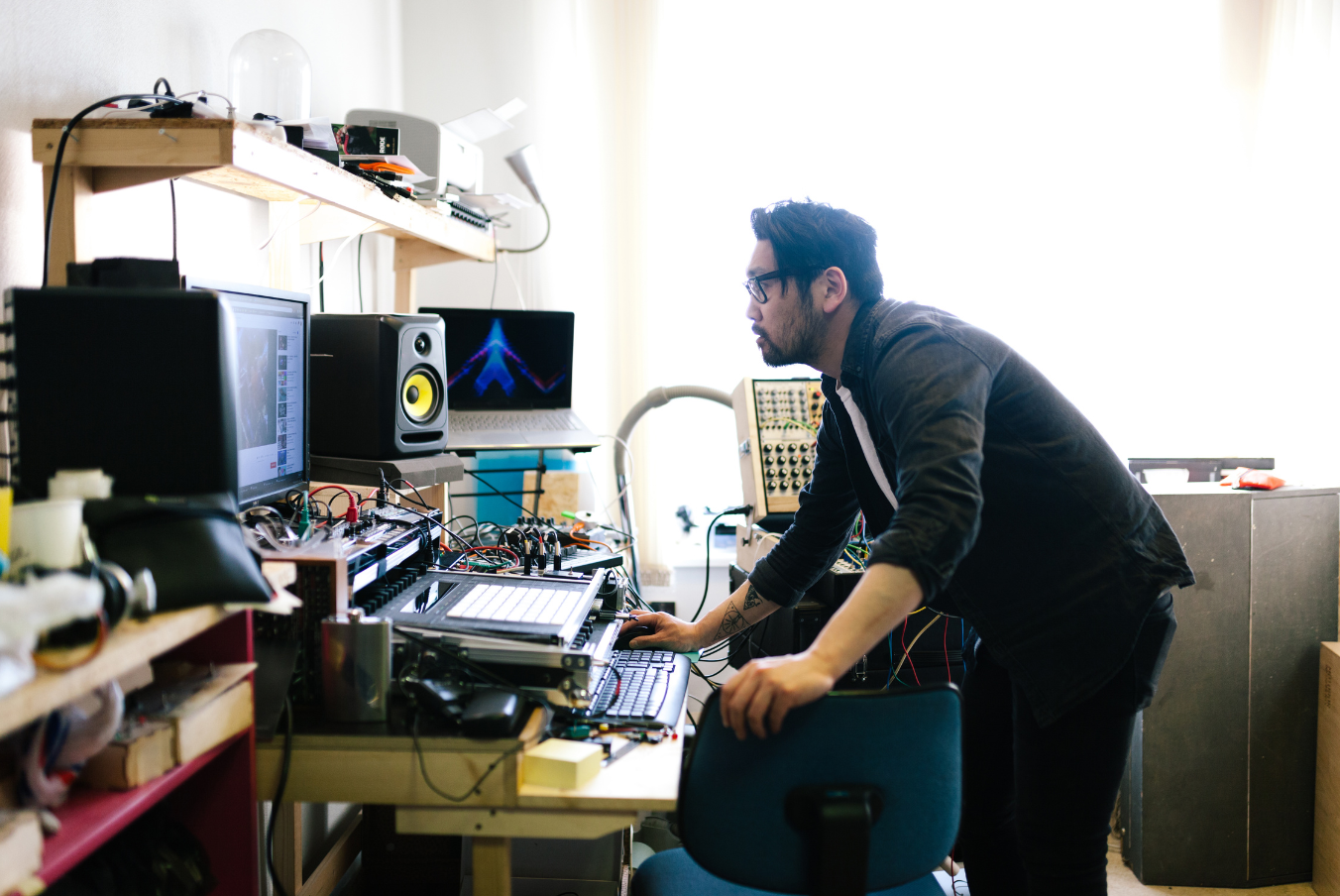
There’s a well-worn line in the modern music economy: “I’ll just self-produce it — it’s cheaper.”
Sometimes it is. More often, it’s different expensive.
In 2025, the real question for artists isn’t whether they can self-produce — laptops, plugins, remote session players and affordable interfaces have made that largely true. The question is whether self-producing is the smartest use of their scarcest resource: focused time.
Because “saving money” on a producer or mixer can quietly become a far bigger bill — paid in delayed releases, diluted creative decisions, burnout, and missed opportunities to build the audience that actually makes the music pay.
And yes: sometimes self-producing is absolutely the right move. But if you’re choosing it mainly as a cost-cutting hack, it’s worth running the numbers in hours, not just pounds.
The hidden invoice: time, attention, and momentum
The pure financial logic of DIY is compelling. Why pay day rates, studio hire, mixing, mastering, when you can “just learn it”?
But every hour you spend doing engineering admin is an hour you’re not doing the things only you can do:
writing and arranging
performance and vocal takes
building audience and community
pitching, marketing, content, press
relationship-building (collabs, support slots, sync/networking)
Streaming-era economics makes this tradeoff more brutal. Spotify (and the wider market) points to big annual royalty totals — Spotify says it paid out $10bn in 2024 alone, with growing numbers of artists crossing high royalty thresholds.
But critics and analysts highlight how uneven those earnings are, with a small fraction of artists capturing a disproportionate share of the upside.
Which means the artist’s best leverage often isn’t shaving production costs — it’s improving velocity and consistency: releasing more effectively, building the funnel, and compounding attention. Time spent “fixing the mix” for the tenth night in a row is time not spent compounding momentum.
“But it’s free if I do it myself”… is it?
Let’s get practical. Even conservative estimates suggest mixing alone is rarely a quick job.
iZotope describes mixing timelines broadly as a few hours to a few days, depending on complexity — and notes that’s before revisions.
That’s from a brand whose entire business is selling tools to people who want to do it themselves.
And if you’re producing, recording, comping, editing, tuning, mixing, printing stems, referencing, taking notes, revising… the hours stack fast.
Here’s the part many artists don’t price in:
Opportunity cost is real cost
If an artist could spend those same hours:
writing the next release
rehearsing and tightening the live show
shooting content and planning rollout
networking to land a support slot
building a mailing list and driving direct-to-fan revenue
…then self-producing isn’t “free”. It’s a reallocation of effort away from growth.
If you’re already at capacity (or close), DIY production can become a tax on your career.
Role confusion: when artists become the entire credits list
A huge reason self-producing feels expensive is psychological: you’re asking one brain to do multiple contradictory jobs.
The producer role is fundamentally about vision, taste, decision-making and psychology — guiding performances and shaping the record’s identity. Engineering is about execution: capture, signal flow, editing, problem-solving. Several education and studio resources draw this distinction clearly: producers lead creative direction; engineers deliver technical outcomes.
When you self-produce, you’re often doing both, plus acting as your own A&R, project manager, and quality controller.
That creates common failure modes:
Endless tweaking (because you can always tweak)
Decision fatigue (too many micro-choices)
Perspective collapse (you can’t hear it like a listener anymore)
Performance compromise (you’re half artist, half technician during takes)
And the most expensive part isn’t that it takes longer — it’s that it can result in worse outcomes: songs released later, with less conviction, after more stress, to smaller impact.
The DIY paradox: ownership up, capacity down
There’s no question the independent sector has gained power and pride in owning masters and running the machine. The data and trade commentary over recent years has consistently reflected that shift in mindset toward retaining rights and building direct value.
But independence only pays if you can keep moving.
The modern “DIY label” artist is effectively running a small business. In that model, time is capital — and you don’t want all your capital tied up in a single production process if the bottleneck stops everything else.
Put bluntly: you can’t scale a career if every release requires you to become a full-time mix engineer for six weeks.
When self-producing is the right move
Self-producing can be a genuine advantage when:
The sound is inseparable from the artist
(genre scenes where authenticity and sonic signatures are created at source)The artist is already fast and decisive
(high throughput, strong workflow, consistent referencing)The project needs experimentation
(you’re in R&D mode; the “cost” is part of building a future identity)Budget is truly zero and the alternative is no release
(DIY as a bridge strategy, not a permanent identity)You’re outsourcing selectively
(hybrid model: you produce, but outsource mix/master or editing)
The key is intent. If you’re self-producing because it’s creatively essential, you’ll tolerate the time cost — and probably enjoy it. If you’re doing it because it feels like the only financially responsible choice, you may be quietly trading away the very activities that create income.
The hybrid model is becoming the grown-up answer
A lot of artists are landing on a pragmatic middle path:
self-produce the core (writing/arrangement/sound palette)
track at home or in short focused sessions
outsource the specialist finishing steps (editing, mix, master)
keep creative control, but buy back time and objectivity
Marketplaces and services make that easier than ever; even their own guidance acknowledges budget spread — from “hundreds” to “thousands” depending on tier and credits.
The point isn’t that everyone must spend big. It’s that the smart spend is often on the moments that unlock:
speed
confidence
perspective
consistency
…and therefore career momentum.
1) Define the hats
Artist / Producer / Engineer / Mixer / Project Manager — what decisions sit with each?
What “done” means for each role?
2) Map the workflow (and the bottleneck)
Where does the project slow down? Recording? Editing? Mixing? Revisions? Release assets?
3) Build a “time budget” alongside the money budget
Artists can estimate: If my mix phase takes X hours per track, what does that do to my release calendar? (Even broad guidelines help.)
4) Make outsourcing a skill, not a surrender
How to brief collaborators, reference tracks, set revision limits, and protect the artist’s taste — while using external expertise to move faster.
5) Protect the creative core
Ringfence time for writing, performance, and audience-building — the parts that most directly drive growth.
The biggest shift artists report after this kind of training is adaptation is that they stop treating self-producing as a badge of honour, and start treating it as a strategic choice.
The bottom line: money saved can be momentum lost
Self-producing isn’t “cheap” or “expensive”. It’s a trade.
If you’re early-stage and building skills, DIY is often the best investment you can make. But if self-producing becomes the default because you’re afraid to spend, you may be paying a much higher price: slower releases, weaker decisions, and less time doing the work that grows the career.
The sharpest artists (and teams) aren’t asking, “How do we make this cheaper?”
They’re asking: “Where is my time most valuable — and what buys me speed without sacrificing identity?”
That’s the saving.
Wider reading
Spotify Loud & Clear (Spotify) (last Updated March 2025)– https://loudandclear.byspotify.com/
Financial Times: Spotify says it paid $10bn in royalties last year – https://www.ft.com/content/3824c37d-1c16-4da2-809c-c683790ed114
The Guardian: analysis of Spotify’s Loud & Clear report – https://www.theguardian.com/music/2025/mar/12/spotify-is-trumpeting-big-paydays-for-artists-but-only-a-tiny-fraction-of-them-are-actually-thriving-loud-and-clear-report
iZotope: “How long does it take to mix and master a song?” (Apr 9, 2024) – https://www.izotope.com/en/learn/how-long-mix-and-master
Wisseloord Studios: “What’s the difference between a producer and an engineer” (Nov 11, 2025) – https://wisseloord.org/uncategorized/whats-the-difference-between-a-producer-and-an-engineer
MBW: TuneCore has paid out over $5bn to self-releasing artists to date (Nov 12, 2025) – https://www.musicbusinessworldwide.com/tunecore-has-paid-out-over-5-billion-to-self-releasing-artists-to-date/
SoundBetter: “Top Mixing Engineers for Hire” (budget expectations) – https://soundbetter.com/s/mixing-engineers